The nipple is not simply a protruding skin structure.
Inside the nipple, there is a central core where blood vessels, nerves, and milk ducts are densely concentrated. If you try to reduce it too much, problems with function and circulation can occur before any issue with shape. That’s why the key to nipple reduction is not “how much to reduce,” but which structures you can safely preserve.
Nipple Reduction The Aesthetics of 1 cm
1. A subtle 1 cm, but the impression changes dramatically.
The nipple is a key point that shapes the overall impression of the breast.
Even a 1 cm difference can change the central balance of the breast and the overall silhouette.
2. Not “smaller,” but “more harmonious.”
We pursue a design-centered surgery that considers the entire body, breast shape, and the ratio with the areola.
3. A method that preserves natural projection.
Not overly flattened or overly pointed,
our goal is restoring natural beauty by preserving the original nipple structure as much as possible.
4. A preservation surgery that protects function.
If you are planning to breastfeed, we operate in a way that preserves the milk ducts and nerves.
The safest, most natural structure:
V-shaped reduction surgery

In nipple reduction, the baseline structure we use as a standard is reducing it into a V-shape (V-shaped nipple reduction) and leaving a central core structure of about 1.0 × 1.0 × 0.8 cm.
These numbers are not just an aesthetic guideline.
They are close to the safest structural minimum where:
– blood circulation remains stable,
– the nipple tip rounds smoothly,
– the risk of scarring and deformation is minimized.
In nipple reduction, what matters more than the standard of “small” is the minimum size that can be safely maintained.
V-shaped nipple reduction method
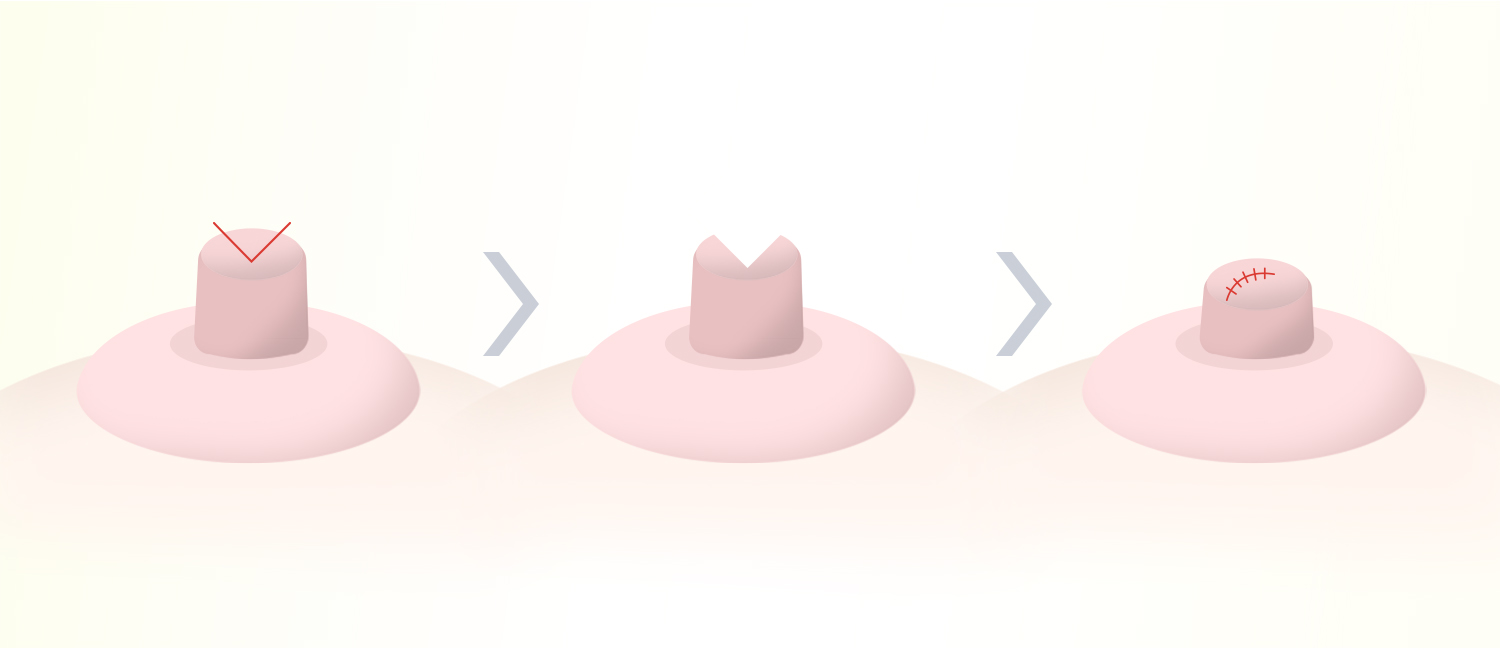
This surgical method can definitively reduce nipple size by excising the upper part of the nipple in a V-shape and then suturing it.
Pros:
Can reduce by up to 80–90%.
Because the pulling force is not strong, depigmentation is rare.
The incision line is not noticeable.
Cons:
Breastfeeding may not be possible.
Nipple reduction is a surgery where the ‘destination’ matters more than the starting point

Nipple reduction is not a surgery that reduces a few millimeters from the current size.
The core of this surgery is not the current size, but what kind of structure will be left after surgery.
So, regardless of whether the nipple is currently large or small, or even if the two sides differ, I choose to explain the destination structure first—(1 × 1 × 0.8 cm), which best maintains circulation and shape stability—rather than measuring the starting point in numbers.
Nipple reduction that allows breastfeeding
This method reduces the nipple without interfering with breastfeeding. It is the most recommended method for women who want to breastfeed.
Surgical method: By excising excess skin around the nipple, it can be reduced by combining vertical excision and horizontal excision depending on the shape.
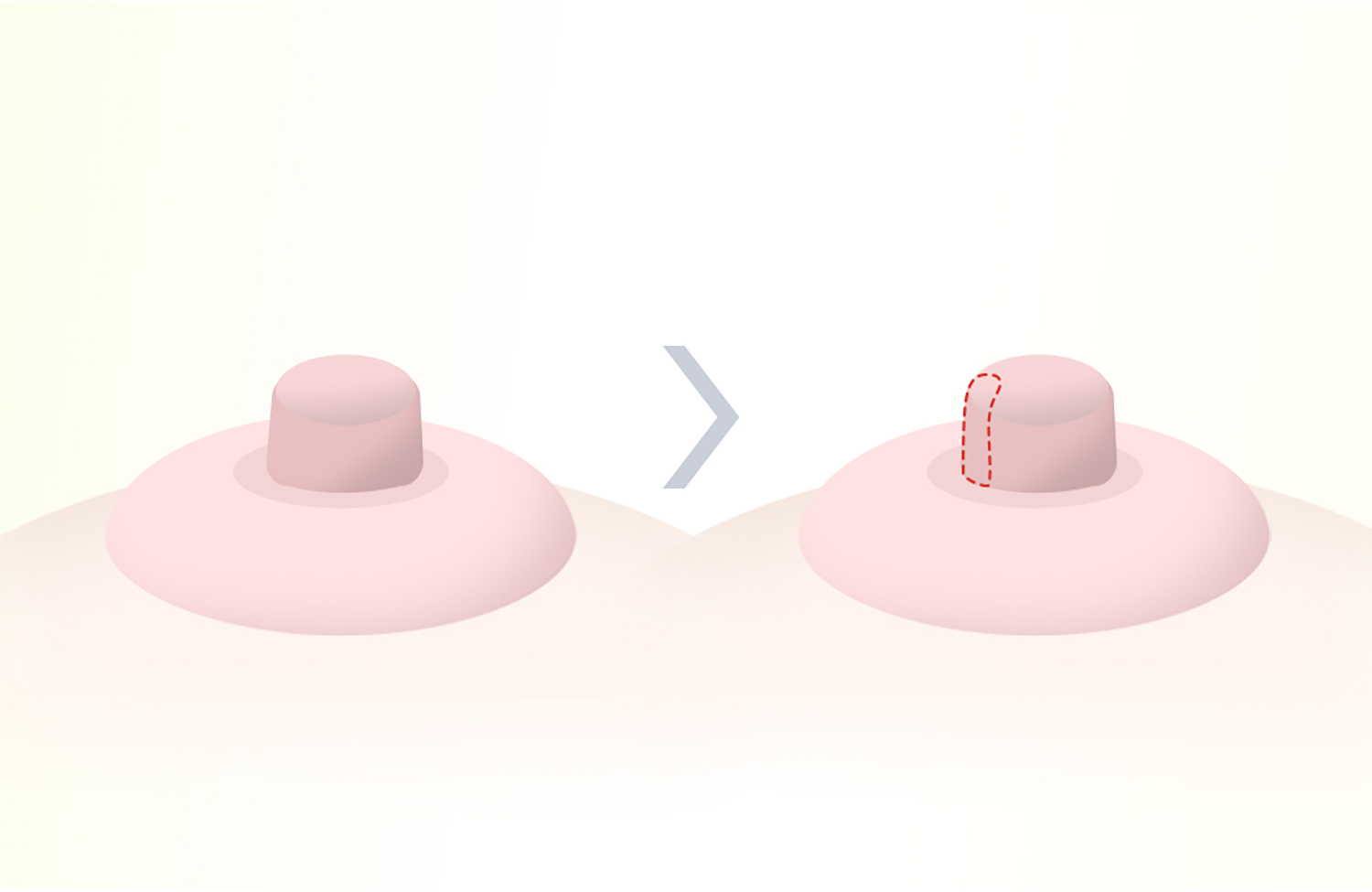
Vertical skin excision method for nipple reduction
Vertical skin excision method for nipple reduction: A surgical method that reduces overall width by excising a portion of the nipple and suturing it.
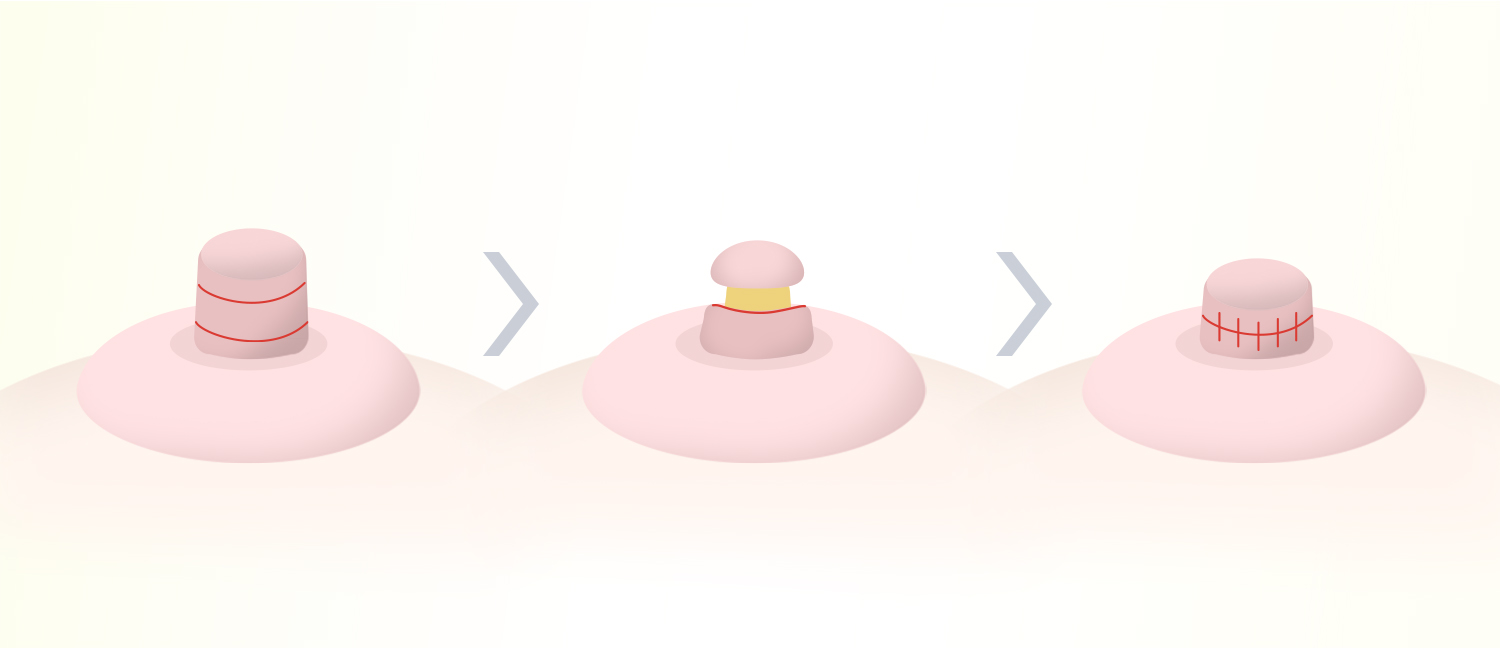
Horizontal skin excision method for nipple reduction
Horizontal skin excision method for nipple reduction: A surgical method that shortens length by excising the skin at the base of the nipple and suturing the nipple to the areola.
Pros:
Because it does not affect gland tissue or milk ducts, it does not significantly impact breastfeeding.
Cons:
1. The downside is that it cannot reduce very much. Even at maximum, it can only reduce by about 50%.
2. Because it is sutured under tension after partial excision, scars may be noticeable. The more you reduce, and the more you combine vertical and horizontal excision, the greater the pulling force (tension), making surgical scars more visible.
3. Hypertrophic scars may remain, but more importantly, scar tissue lacks melanocytes, so depigmentation can stand out compared with a darker-pigmented nipple–areola complex.
”Nipple reduction is not about how much you can reduce—it is a choice about what you will preserve.


