
Inverted nipples are often caused by a lack of underlying structural support rather than being merely a superficial issue.
Inverted Nipple Correction:
Restoring 3D Structure
Not a surgery that pulls it out, but a surgery that supports it from within
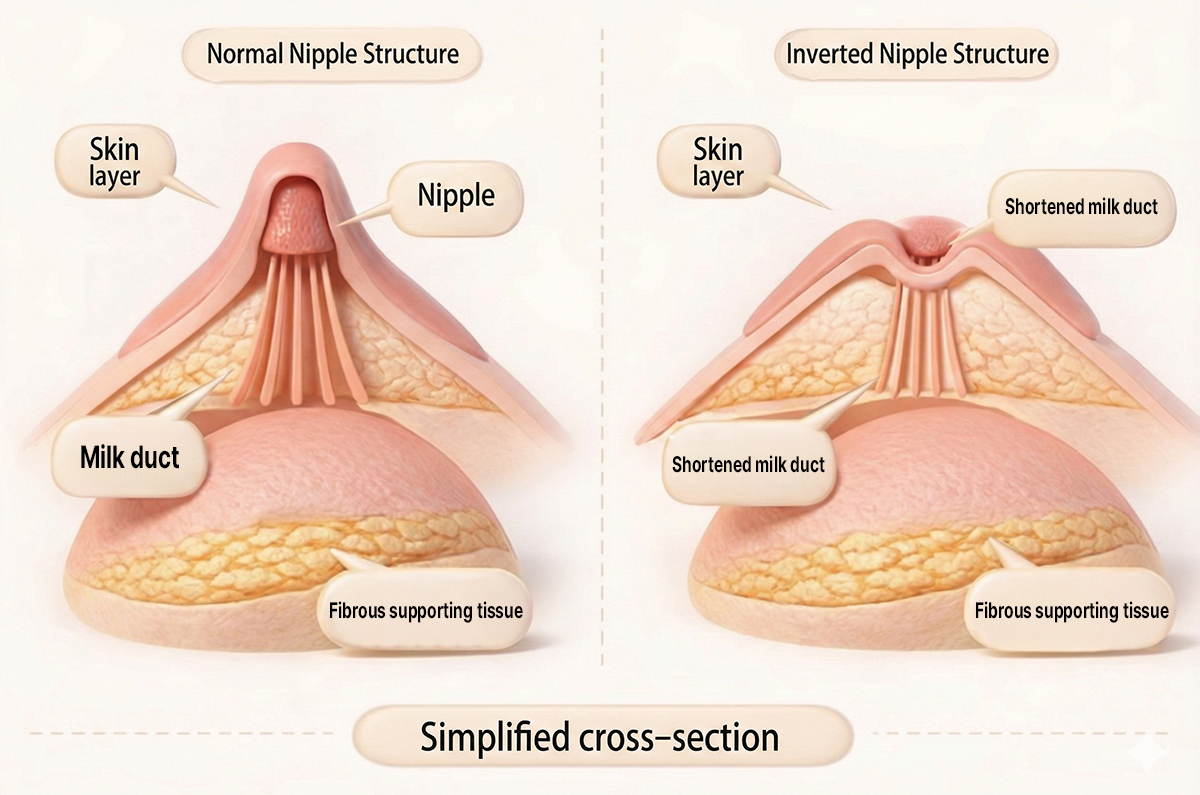
Left: Normal nipple structure with well-developed skin, fibrous tissue, and milk ducts. Right: Typical structure of an inverted nipple, showing incomplete development of internal fibrous tissue and milk ducts.
From the outside, the nipple looks like a small projection that slightly rises above the skin, but inside there is a three-dimensional structure where milk ducts, fibrous tissue, and supporting elements are interconnected.
If any of these internal structures fail to provide sufficient support, the nipple can naturally be pulled inward even at rest.
That is why inverted nipple correction should not be a procedure that forcibly “pulls the nipple out” from the outside, but rather a surgery that organizes the internal structures and supports the nipple so it can remain in its proper position.
What Causes Inverted Nipples?
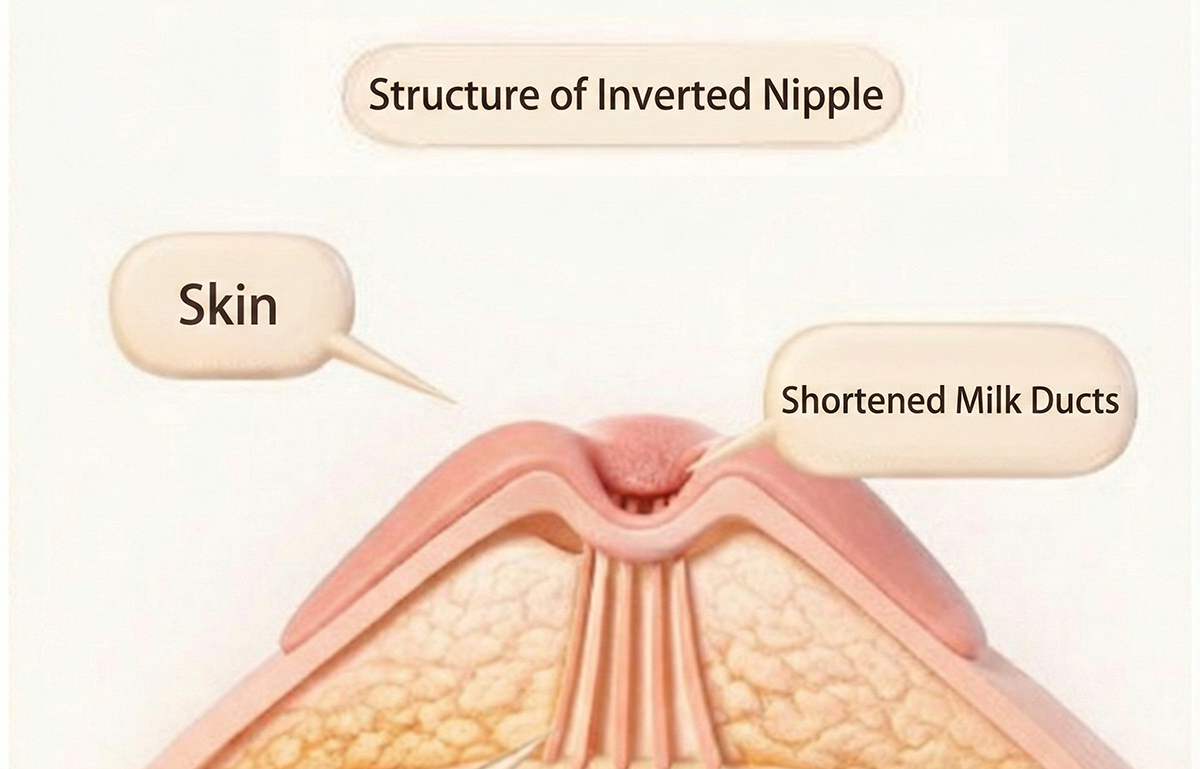
Structure of an inverted nipple
The Anatomy of an Inverted Nipple While the severity varies from person to person, inverted nipples are typically caused by a combination of several structural factors rather than a single reason.
First, the length of the milk ducts.
If the milk ducts are relatively short or are being pulled from within, the nipple is naturally subjected to an inward force.
Second, the tension of fibrous tissue.
If the fibrous tissue beneath the nipple pulls tightly, the nipple will retain a tendency to retract, no matter how much it is pulled outward.
Third, the support structure beneath the nipple.
If the foundation supporting the nipple is weak, it may appear projected temporarily but will often retract again over time. Therefore, inverted nipples should be understood not as a simple issue solved by pulling them out, but as a condition involving complex internal structures.
Key Criteria for Determining the Surgical Method
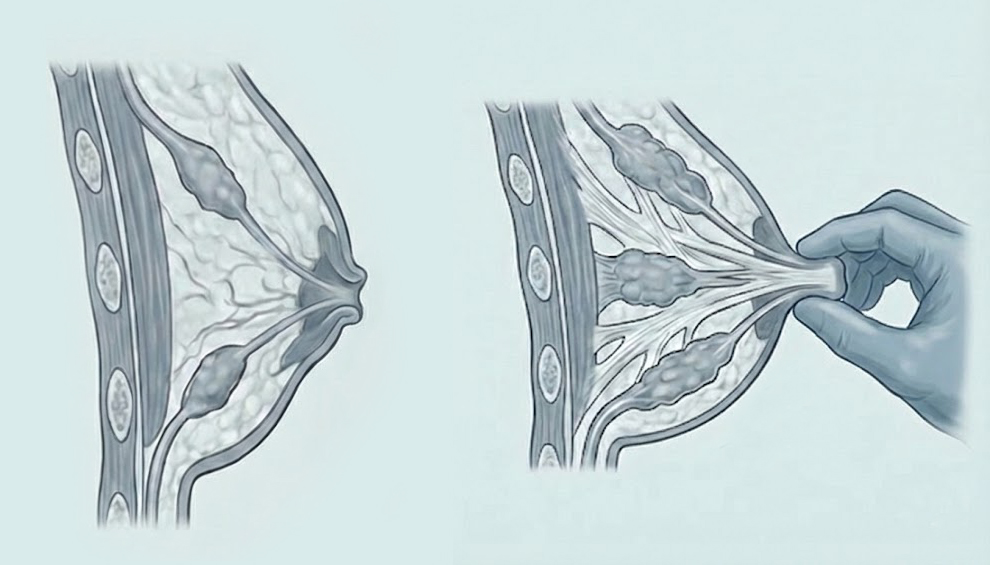
“To what extent can this nipple maintain itself in its current state?”
Based on this criterion, the range and intensity of correction change.
Cases Maintained by Relatively Mild Correction
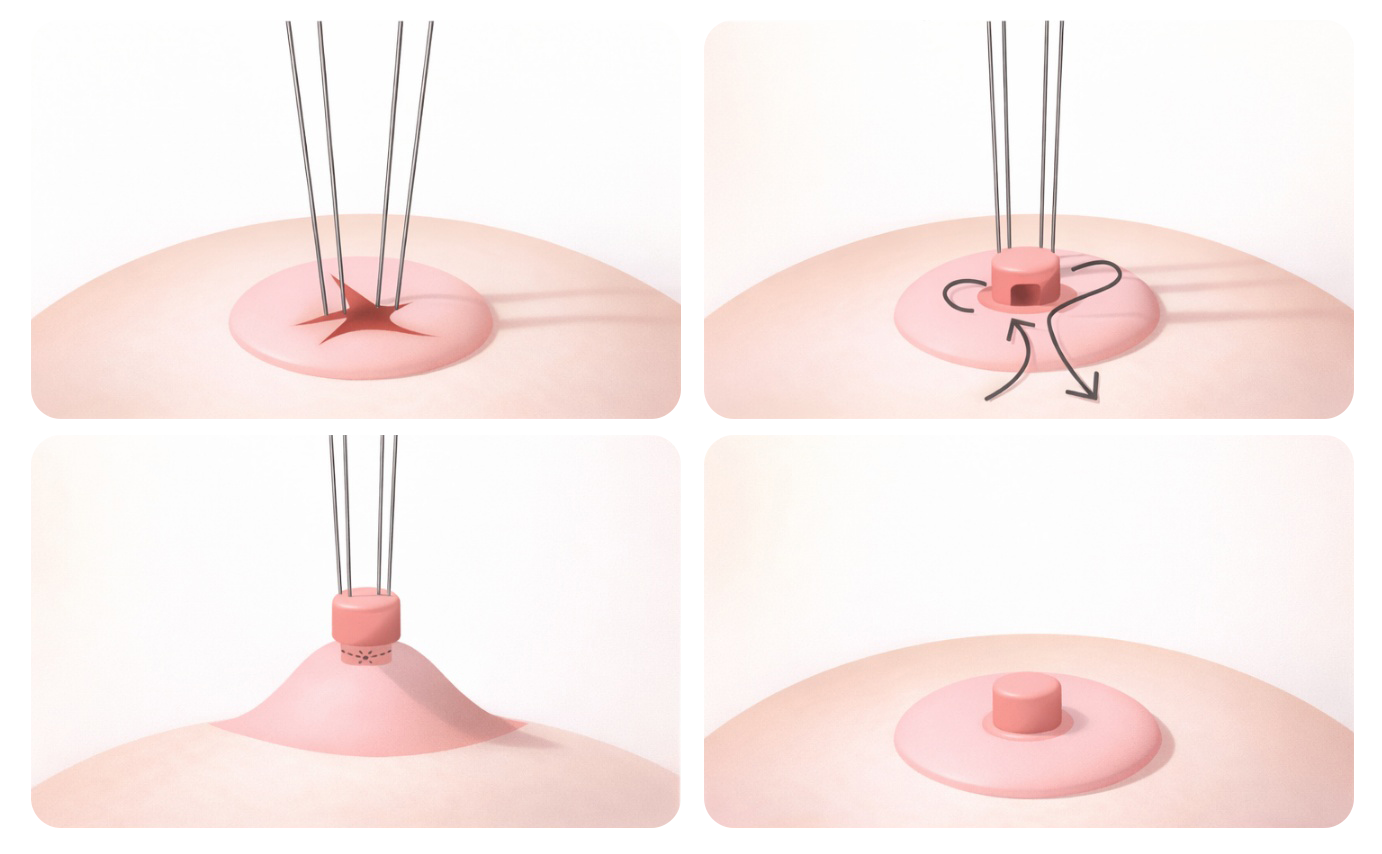
Non-Incisional Correction for Inverted Nipples
During the examination, there are cases where the nipple emerges naturally when pulled lightly and stays projected for a relatively long time even after letting go. This indicates that the internal pulling force is not strong and that some underlying support structure remains. Especially for those who plan to breastfeed in the future or wish to minimize recovery time, a relatively mild correction with minimal tissue damage may be sufficient to maintain the shape.
However, this cannot be determined solely by external appearance. It requires a direct assessment of the internal structure during the pre-operative consultation to make an accurate judgment.
Cases Requiring Detailed Structural Correction
Conversely, there are cases where the nipple does not emerge easily when pulled or retracts immediately after coming out. This suggests a relatively strong internal force pulling the nipple inward.
If we rely solely on tying or fixing the nipple from the outside in such conditions, it may look fine initially, but recurrence is quite common over time. Furthermore, repeating such superficial corrections can lead to adhesions (scar tissue) in the internal tissues and compromise blood circulation, making future corrections even more difficult.
Therefore, in these cases, rather than simply altering the exterior, a fundamental correction is required to reorganize the internal structure and provide support to prevent the nipple from retracting again.
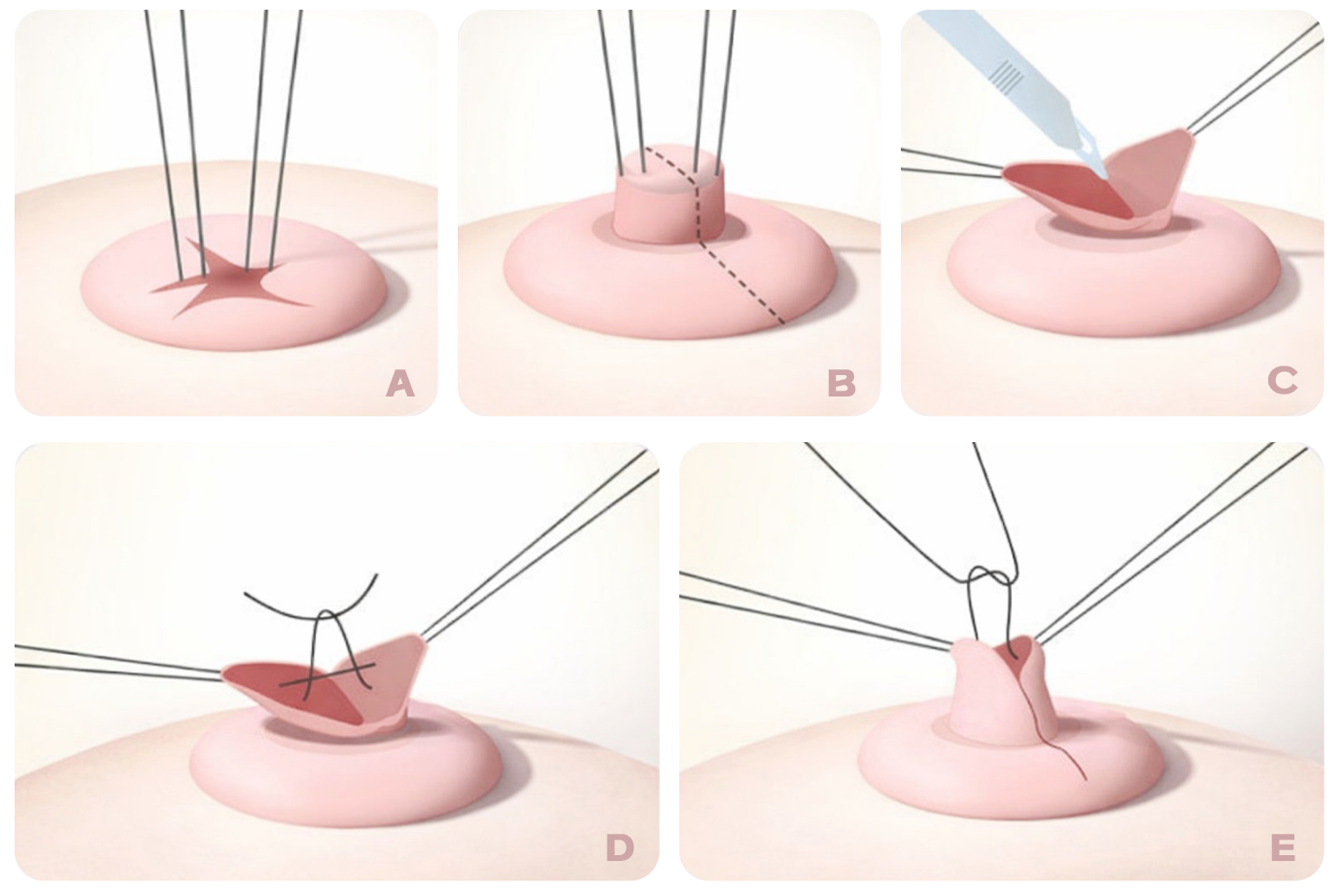
Incisional Correction for Inverted Nipples
Which method should you choose?
For Definite Correction Without Recurrence
Since inverted nipples are often caused by a congenital lack of tissue, it is advisable to consider a procedure that offers a definitive corrective effect from the start, rather than searching for a simple, temporary fix. Repeated surgeries can lead to tissue atrophy and decreased blood circulation; therefore, it is more rational to choose a method that ensures success in a single procedure.
If Considering Breastfeeding
If preserving the possibility of breastfeeding is your top priority, non-incisional methods may be considered first. However, the key factor is whether the nipple can be easily and fully pulled out by hand. In cases of severe inversion where the risk of recurrence is high, it is more practical to consider an incisional method after childbirth.
For Aesthetic Reasons
If your primary goal is to resolve aesthetic concerns, a surgical incision may be an effective option. However, if you are considering the possibility of breastfeeding in the future, it is highly recommended to have a thorough consultation with a specialist before proceeding with the surgery.
”Inverted nipple surgery may appear to be a minor procedure on the surface, but it is a decision that should never be taken lightly.
The critical factor is not 'which method seems easier,' but how long and how stably the result can be maintained.
Making the safest and least invasive choice based on that standard—that is the essence of inverted nipple correction without recurrence.


